Thursday, December 30, 2010
2010 review of green technologies
www.guardian.co.uk/environment/gallery/2010/dec/29/2010-green-technologies


Green Roofs are Changing Architecture and Planning

New Heden by Daniel Andersson
Daniel Andersson, working with Fredrik Kjellgren and Joakim Kaminsky, have developed New Heden in Gothenburg Sweden. The buildings are "built as sliced hills with grass roofs that can be walked upon". The rooftops become terrain. Kids are playing. It is all green and the "Grass roofs and parks enrich the animal life and plant life and let nature become an integrated part of the city centre."Or not? Our Gothenburg correspondent April says:
It's not a space that I use much, except to ride through on my bike at least a couple of times a week. But it's where the circus goes, it's where the kids play soccer, it's a big open breath in between the denser city blocks. Kind of hard to lose that.More: Green Roofs Meet the Ground in New Heden
Credit: Kjellgren Kaminsky Architects
on June 10, 2009
Monday, December 27, 2010
Renewable Energy Could Create Millions of Jobs

Flickr: Davipt
By Elizabeth Wolfe
“Global leaders can tackle the twin crises of global economic recession and climate change head on by investing in renewable energy,” Damon Moglen, a Greenpeace campaign director, said.
Switching from a global reliance on coal to a cleaner, renewable source of energy would prevent 10 billion tons of carbon dioxide emissions by 2030. The report also predicts a boom in jobs, with 2.7 million more clean energy jobs produced by the switch. This increase in jobs would come at the same time the coal industry contracts from its current 4.7 million jobs to an estimated 1.4 million by 2030.
The authors of the report assert that a change to clean energy would create more jobs than would exist if the world were to continue its reliance on coal. “For each job lost in the coal industry our green energy scenario…creates three new jobs in the renewable power industry. We can choose green jobs and growth or unemployment, ecological and social collapse” Moglen said.
With the new jobs that would be created, the report shows that 6.9 million people could be employed in the renewable power industry by 2030. An additional 1.1 million jobs could also be created due to higher efficiency in electrical applications.
The renewable energy industry already employs 450,000 people in Europe, according to the report. A global consensus on energy sources is necessary, however, to create an actual change to humans’ impact the environment.
The report, “Working for the Climate: Renewable Energy & The Green Job [R]evolution” is based on research by Greenpeace and the Institute for Sustainable Futures at the University of Technology Sydney.
Being a Better, Greener, Tourist
Sun, Dec 6, 2009
courtesy of iamgreen

ECL
Green is all the rage these days. Get a hybrid car, recycle, don’t waste water. Make your home more energy-efficient, install solar panels, ride a bike. Companies are selling products with less packaging, publishing annual reports on sustainability, and working to “green” their value chain. We hear “save the rainforest”, “protect the sea turtles”, and “pack it in, pack it out“ when you’re hiking.
“Green” has become undeniably woven into our daily lives, work, and volunteer and leisure time, as well as our financial donations. But what about when we travel? We don’t hear a lot about how to be a better, greener tourist. The ways in which you can be smarter, more eco-friendly tourist aren’t necessarily novel and many are based off of what we consciously do in our daily routines—but it’s easy to forget about them when you travel. I would argue that being a “green” tourist may actually be too narrow, and that that aiming to be a sustainable tourist would offer a better way to maintain (or improve!) the destination environment, culture, and economy. Here are a few tips worth considering before or during each of your adventures:
Happy green and sustainable traveling!
By: Jessica
*Cubero-Pardo, Priscilla, and Bastidas, Eddy Araujo. (2008). The impact of ecotourism activities on wildlife and sessile benthic species in the Galapagos Marine Reserve. In: Galapagos Report 2007-2008. Puerto Ayora, Galapagos, Ecuador.
“Green” has become undeniably woven into our daily lives, work, and volunteer and leisure time, as well as our financial donations. But what about when we travel? We don’t hear a lot about how to be a better, greener tourist. The ways in which you can be smarter, more eco-friendly tourist aren’t necessarily novel and many are based off of what we consciously do in our daily routines—but it’s easy to forget about them when you travel. I would argue that being a “green” tourist may actually be too narrow, and that that aiming to be a sustainable tourist would offer a better way to maintain (or improve!) the destination environment, culture, and economy. Here are a few tips worth considering before or during each of your adventures:
- Water bottles. Think about how much water you drink when you’re traveling. Now ask yourself how many plastic water bottles do you buy, guzzle, and promptly throw away? I bet the answer is “a lot”. So how about just taking a Nalgene or Sigg water bottle with you—or refill the plastic bottle you bought when you get to your destination. Easy peasey, you just saved a lot of plastic. But, you might be concerned with whether the country’s water is potable – a very valid point! Here are two different solutions I have found to be very useful, user-friendly, and relieve my worries. The first one is a water bottle with a carbon filter IN it. You squeeze the water bottle, the water is forced through the filter, and voila, it’s purified and squirting into your mouth: http://shop.katadyn.com/products/155186/Ultralight_Series_Products. The second one is a UV purifier which plops onto the top of your wide-mouthed Nalgene bottle, making the water safe and potable in under a minute: http://www.steripen.com/travel/products.html. I found them to both be well worth their cost, as much for peace of mind as for being environmentally responsible. Try one out!
- Learn what NOT to buy. Now this suggestion may seem bizarre, but think about what happens when a resource or material is scarce, like ivory. Yes, I agree that in many countries the selling of ivory is outlawed, but many destinations have materials which are not—and even if they are illegal, a black market exists. The rare resource normally commands a higher price from tourists– and concurrently destroys both the animals and the ecosystem (in often irreparable ways). Store owners can be very easily motivated by money and high margins at the expense of preserving the world around them. If you travel to the Galapagos Islands, for instance, your guides will ask you to please not buy anything made out of black coral bones: “If there are no buyers, they’ll stop selling it.” Don’t wait to be told what not to buy: ask. Find out what natural resources or materials you should avoid buying when you travel and you will be greener, more sustainable tourist. You can make an impact and help to neutralize this eco-unfriendly process.
- Don’t use camera flashes on animals in their natural habitat. This has dual sustainability upsides. First, research shows that camera flashes can actually change the behavior of animals*. If you can avoid flashes, you’re leaving less of an impact on the animals themselves. This by definition will make you a more sustainable tourist. Second, the side bonus: your camera battery will last longer and you’ll need to charge it less frequently. If you’re concerned that the animal is moving quickly and that you “need” a flash, you could put your camera on “sport mode”. Or, if you think it’s too dark, you can probably (even on point-and-shoot cameras these days) adjust the ISO up to 800 or higher. If you don’t know how to do this, find someone schlepping around a big camera with an expensive lens and ask – they’ll likely be knowledgeable, happy to help, and give you additional tips for the lighting. Either way you look at it, not flashing the animals will reduce your effects on the eco-system as well as prolong your battery life: a win-win for the environment and you, the sustainable tourist.
Happy green and sustainable traveling!
By: Jessica
*Cubero-Pardo, Priscilla, and Bastidas, Eddy Araujo. (2008). The impact of ecotourism activities on wildlife and sessile benthic species in the Galapagos Marine Reserve. In: Galapagos Report 2007-2008. Puerto Ayora, Galapagos, Ecuador.
Sunday, December 26, 2010
2010 World in Focus Contest Winners by National Geography
These are some of the pictures among the top 10!!
Uber fantastic, surely despicts beauty around the world.
Enjoy everyone!!

Seven-day/six-night stay for two in Waikiki, Hawaii, courtesy of Aqua Hotels & Resorts.
Larry Louie photographed the Tripureshwar Mahadev Mandir Temple in the slums of Nepal’s capital city, steps away from where people lived under bridges. “Most foreign tourists are warned away from Kathmandu, told this is a chaotic city falling apart,” he says. “This photo shows there’s still old beauty here, even in the slums.” He was drawn to the scene by the flying birds, backlit by the sunrise burning through the fog. “The scene was such a contrast to its surroundings.” (Canon EOS 5D Mark II digital camera, 24-105mm lens at 24mm, exposure at 1/125 second, f/11, ISO 400)
For the fifth year, Traveler paired its photo contest with that of Photo District News, an award-winning magazine for professional photographers. More than 3,700 avid amateur photographers entered nearly 11,000 images in the 2010 World in Focus competition—our 22nd annual contest. The pictures captured an assortment of the places, wildlife, and people that make our travels memorable, evoking a sense of delight or discovery—or both.

Intensive, 2½-day photography course at Santa Fe Workshops.
Robin Moore visited a small Samburu village in Kenya’s Rift Valley. “There were a half dozen huts made of sticks and mud,” he says. “I was captivated by this girl’s body language.” The child, who was partially hiding her face, looked back at Moore, transfixed. “As I raised my camera and gestured to ask if I could take her photo, her gaze didn’t falter,” says the photographer. “This image captures that moment of mutual curiosity between me, a foreigner, and a world so very different from my own.” (Canon EOS 5D Mark II digital camera, 17-40mm lens at 17mm, exposure at 1/5000 second, f/4, ISO 400)

Nikon L100 Coolpix camera or equivalent, $100 B&H gift card, and a $100 certificate for Canson Infinity media.
Marjorie Lang was en route to a festival in Udaipur, India, when she saw this happy girl in motion, delightfully backlit. “She was just there, singing and dancing barefoot in a narrow blue street with her orange dress,” Lang says. “There’s nothing spectacular or unusual about the photograph, but I believed in the beauty of the simple moment.” (Canon EOS 5D Mark II digital camera, 24-70mm lens at 70mm, exposure at 1/125 second, f/4, ISO 100)

Nikon L100 Coolpix camera or equivalent, $100 B&H gift card, and a $100 certificate for Canson Infinity media.
Weixin Shen and his wife were looking for a place to have dinner in Delhi, India, when they came upon a secondhand bookstore. “The owner was trying to make room for his new arrivals,” Shen says. Although initially attracted to the wall of books, Shen decided that including the people on the periphery of the scene added layers to the composition and gave the feeling that “you were right there.” (Nikon D200 digital camera, 12-24mm lens at 13mm, exposure at 1/100 second, f/4, ISO 400)

Nikon L100 Coolpix camera or equivalent, $100 B&H gift card, and a $100 certificate for Canson Infinity media.
Robin Mooregot this close-up of a zebra glancing at him in Tanzania’s Ruaha National Park. “The early afternoon sun created a dramatic contrast,” he says, “and allowed me to blow out the background and render a black-and-white image that highlights the zebra’s striking markings without distraction.” (Canon EOS 5D Mark II digital camera, 100-400mm lens at 400mm, exposure at 1/3200 second, f/5.6, ISO 320)
Uber fantastic, surely despicts beauty around the world.
Enjoy everyone!!

First Prize
Photograph by Larry Louie
“Temples of Kathmandu” Seven-day/six-night stay for two in Waikiki, Hawaii, courtesy of Aqua Hotels & Resorts.
Larry Louie photographed the Tripureshwar Mahadev Mandir Temple in the slums of Nepal’s capital city, steps away from where people lived under bridges. “Most foreign tourists are warned away from Kathmandu, told this is a chaotic city falling apart,” he says. “This photo shows there’s still old beauty here, even in the slums.” He was drawn to the scene by the flying birds, backlit by the sunrise burning through the fog. “The scene was such a contrast to its surroundings.” (Canon EOS 5D Mark II digital camera, 24-105mm lens at 24mm, exposure at 1/125 second, f/11, ISO 400)
For the fifth year, Traveler paired its photo contest with that of Photo District News, an award-winning magazine for professional photographers. More than 3,700 avid amateur photographers entered nearly 11,000 images in the 2010 World in Focus competition—our 22nd annual contest. The pictures captured an assortment of the places, wildlife, and people that make our travels memorable, evoking a sense of delight or discovery—or both.

Second Prize
Photograph by Robin Moore
“Connection” Intensive, 2½-day photography course at Santa Fe Workshops.
Robin Moore visited a small Samburu village in Kenya’s Rift Valley. “There were a half dozen huts made of sticks and mud,” he says. “I was captivated by this girl’s body language.” The child, who was partially hiding her face, looked back at Moore, transfixed. “As I raised my camera and gestured to ask if I could take her photo, her gaze didn’t falter,” says the photographer. “This image captures that moment of mutual curiosity between me, a foreigner, and a world so very different from my own.” (Canon EOS 5D Mark II digital camera, 17-40mm lens at 17mm, exposure at 1/5000 second, f/4, ISO 400)

Merit Prize
Photograph by Marjorie Lang
"Happy Girl"Nikon L100 Coolpix camera or equivalent, $100 B&H gift card, and a $100 certificate for Canson Infinity media.
Marjorie Lang was en route to a festival in Udaipur, India, when she saw this happy girl in motion, delightfully backlit. “She was just there, singing and dancing barefoot in a narrow blue street with her orange dress,” Lang says. “There’s nothing spectacular or unusual about the photograph, but I believed in the beauty of the simple moment.” (Canon EOS 5D Mark II digital camera, 24-70mm lens at 70mm, exposure at 1/125 second, f/4, ISO 100)

Merit Prize
Photograph by Weixin Shen
"Wall of Books"Nikon L100 Coolpix camera or equivalent, $100 B&H gift card, and a $100 certificate for Canson Infinity media.
Weixin Shen and his wife were looking for a place to have dinner in Delhi, India, when they came upon a secondhand bookstore. “The owner was trying to make room for his new arrivals,” Shen says. Although initially attracted to the wall of books, Shen decided that including the people on the periphery of the scene added layers to the composition and gave the feeling that “you were right there.” (Nikon D200 digital camera, 12-24mm lens at 13mm, exposure at 1/100 second, f/4, ISO 400)

Merit Prize
Photograph by Robin Moore
"Zebra Up Close"Nikon L100 Coolpix camera or equivalent, $100 B&H gift card, and a $100 certificate for Canson Infinity media.
Robin Mooregot this close-up of a zebra glancing at him in Tanzania’s Ruaha National Park. “The early afternoon sun created a dramatic contrast,” he says, “and allowed me to blow out the background and render a black-and-white image that highlights the zebra’s striking markings without distraction.” (Canon EOS 5D Mark II digital camera, 100-400mm lens at 400mm, exposure at 1/3200 second, f/5.6, ISO 320)
Thursday, December 23, 2010
Thursday, December 16, 2010

Give.....
Though we hear it over and over at every holiday seasons......
I cannot stress enough the importance of giving to people in need. Sometimes, we become so blazé by our wants and needs, that we often forget to cherish the environment we live in, our families, and the friends we have. we are thinking about the new gadgets we want to have for this holiday seasons, the trips we will be having, and the parties we will attend to.
But we fail to think about the ones that are living under the poverty line....
Please give this season.....
Make yourself happy by making others happy!!........

I cannot stress enough the importance of giving to people in need. Sometimes, we become so blazé by our wants and needs, that we often forget to cherish the environment we live in, our families, and the friends we have. we are thinking about the new gadgets we want to have for this holiday seasons, the trips we will be having, and the parties we will attend to.
But we fail to think about the ones that are living under the poverty line....
Please give this season.....
Make yourself happy by making others happy!!........

Monday, December 13, 2010
"Starbucks Calls Cup-to-Cup Recycling "Viable"
by Lloyd Alter, Toronto  on 11.30.10

Starbucks has very proudly announced the completion of a pilot project where they have proven that paper cups can be recycled into new paper cups. They call it a breakthrough in their "goal of ensuring 100 percent of its cups are reusable or recyclable by 2015"
In a press release they say:
"This innovation represents an important milestone in our journey," said Jim Hanna, Starbucks director of Environmental Impact. "We still have a lot of work to do to reach our 2015 goal, but we're now in a much stronger position to build momentum across the recycling industry. Our next step is to test this concept in a major city, which we plan to do in collaboration with International Paper and Mississippi River in 2011."But really, this raises more questions than it answers.
Paper cups are all about convenience; you buy your coffee and you throw away your cup when you are done. International Paper has documented the experiment and learned some lessons, including that customers can't just throw their cup anywhere, but have to do some work:
Consumers must be willing to participate. Consumers must follow the required disposal instructions: no lid, sleeves, straw, food, etc.Essentially, consumers have to forgo a bit of convenience and dispose of their cups properly. Like in the store or bringing them back to the store.
Over the past year, Starbucks has introduced front-of-store cup collection in Toronto and Seattle, where its cups can be recycled, and in San Francisco, where its cups can be composted.But the cups that go out the door- where do they go? What percentage does Starbucks actually capture? In Toronto, where they do recycle cups, 365 million of them still end up in the garbage every year. The percentage that actually gets recycled is probably very small.
Then, let's look at the process that Starbucks and International Paper have gone through in this demonstration project to show that cup-to-cup recycling can be done.

all images credit International Paper from their powerpoint presentation here
First they have to collect them all, and take them to their post-consumer recycled fiber plant at Natchez, Mississippi.

Pulp the cups with a lot of water;

deink them and bleach them; then the pulp comes off the machine in sheets.

After inspection and testing to ensure that the post consumer fiber is food grade, it is stored and then shipped to International Paper's Texarkana Mill in Queen City, Texas.

There, they add water again and turn it back into pulp;

They process it again, put it into the paper machine and turn it into cupstock.

Then they load it into a transport trailer and haul it all to International paper's Kenton Plant in Kenton, Ohio;

Where they turn it back into a paper cup, "closing the loop."
Really, Starbucks and International Paper deserve credit for trying this. But what is the point? From collection to transport to pulping to drying to transport to repulping to making paper to transport to making cups, how much water was used? How much fuel to transport and heat? Can you really call this "viable?"
All so we can feel a little bit better because we are too damn lazy to carry a refillable cup or they are too damn lazy to supply and wash a china mug?
Lets get real, and just admit that the only really sustainable solution is a washable and reusable cup. Everything else is just so much feelgood window dressing.


Sunday, December 12, 2010
No Splash, No Flush Urinals from Kohler
by Collin Dunn, Corvallis, OR, USA on 08.14.07

If the "if it's yellow let it mellow" debate still rages in your home, have we got the solution for you: a waterless urinal. Though most often relegated to restaurant bathrooms and the like, urinals in the home make tons of sense: they save thousands of gallons of water and you don't have to worry about remembering to put the seat down. Add the waterless -- as in, no flushing required -- element and you've got a device that conserves a remarkable amount of water. Take this sleek option from Kohler (above); it's tubular design is not only a refreshing take on the more typical blocky designs, but it "virtually eliminates splashing". Because you don't have to flush it (more on that in a sec), it saves an astounding 40,000 gallons of water per year.

The "waterless" part of the design works like this: there's a "trapway" at the base of the urinal, in which the "sealing liquid" goes; since it's less dense than liquid waste, once your pee goes through, the liquid stays at the top of the trapway, providing a barrier that blocks odors and keeps maintenance to a minimum.
We've seen similar concepts before, but if whizzing into a flower doesn't doesn't do it for you, these might be a better option. More details at ::Kohler via ::Yanko Design
Comments: Though it seems like a viable design, and you can save so much water, but it is left with unclean urinals..... I am not really for this idea, but i figure i should share it.....
Monday, December 6, 2010
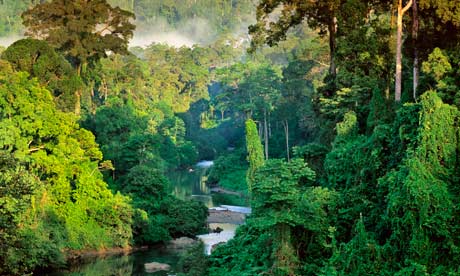
Climate change threat to tropical forests 'greater than suspected'
By John vital
A Mother's Journey- 2007 Pulitzer Prize in Photography, Renee C. Byer
Have been away for a while, but i really have to share these pictures....
Make me realize how lucky i am in life, and how much there is to cherish about life........
http://www.stumbleupon.com/su/2OFnUS/www.sacbee.com/static/newsroom/swf/april07/mother/
Make me realize how lucky i am in life, and how much there is to cherish about life........
http://www.stumbleupon.com/su/2OFnUS/www.sacbee.com/static/newsroom/swf/april07/mother/
Thursday, November 11, 2010
Gary Arndt
Gary Arndt is the man behind Everything Everywhere, one of the most popular travel blogs in the world, and one of Time Magazine’s “Top 25 Best Blogs of 2010.” Since March 2007, Gary has been traveling around the globe, having visited more than 70 countries and territories, and gaining worldly wisdom in the process.
Today, I’ve asked him to share some of that wisdom.
On March 13, 2007, I handed over the keys to my house, put my possessions in storage and headed out to travel around the world with nothing but a backpack, my laptop and a camera.
Three and a half years and 70 countries later, I’ve gotten the equivalent of a Ph.D in general knowledge about the people and places of Planet Earth.
Here are some of the things I’ve learned…
1) People are generally good.

Many people are afraid of the world beyond their door, yet the vast majority of humans are not thieves, murderers or rapists. They are people just like you and me who are trying to get by, to help their families and go about living their lives. There is no race, religion or nationality that is exempt from this rule. How they go about living their lives might be different, but their general goals are the same.
2) The media lies.

If you only learned about other countries from the news, you’d think the world was a horrible place. The media will always sensationalize and simplify a story. I was in East Timor when the assassination attempts on President José Ramos-Horta and Prime Minister Xanana Gusmão occurred in 2008. The stories in the news the next day were filed from Jakarta or Kuala Lumpur, not Dili. It was all secondhand news. I was in Bangkok during the political protests this year, but you’d never have any idea they were happening if you were not in the immediate area where the protests were taking place. The media makes us scared of the rest of the world, and we shouldn’t be.
3) The world is boring.

If there isn’t a natural disaster or an armed conflict, most places will never even be mentioned in the news. When is the last time you’ve heard Laos or Oman mentioned in a news story? What makes for good news are exceptional events, not ordinary events. Most of the world, just like your neighborhood, is pretty boring. It can be amazingly interesting, but to the locals, they just go about living their lives.
4) People don’t hate Americans.

I haven’t encountered a single case of anti-Americanism in the last three-and-a-half years. Not one. (And no, I don’t tell people I am Canadian.) If anything, people are fascinated by Americans and want to know more about the US. This isn’t to say they love our government or our policies, but they do not have an issue with Americans as people. Even in places you’d think would be very anti-American, such as the Middle East, I was welcomed by friendly people.
5) Americans aren’t as ignorant as you might think.

There is a stereotype that Americans don’t know much about the rest of the world. There is some truth to that, but it isn’t as bad as you might believe. The reason this stereotype exists is because most other countries on Earth pay very close attention to American news and politics. Most people view our ignorance in terms of reciprocity: i.e. “I know about your country, why don’t you know about mine?” The truth is, if you quizzed people about third-party countries other than the US, they are equally as ignorant. I confronted one German man about this, asking him who the Prime Minister of Japan was. He had no clue. The problem with America is that we suffer from the same problem as the rest of the world: an obsession with American news. The quality of news I read in other parts of the world is on par with what you will hear on NPR.
6) Americans don’t travel.

This stereotype is true. Americans don’t travel overseas as much as Brits, Dutch, Germans, Canadians or Scandinavians. There are some good reasons for this (big country, short vacation time) and bad ones (fear and ignorance). We don’t have a gap year culture like they have in the UK and we don’t tend to take vacations longer than a week. I can’t think of a single place I visited where I met Americans in numbers anywhere close to our relative population.
7) The rest of the world isn’t full of germs.

Many people travel with their own supply of water and an industrial vat of hand sanitizer. I can say in full honestly that I have never used hand sanitizer or gone out of my way to avoid contact with germs during my travels. It is true that in many places you can get nasty illnesses from drinking untreated water, but I don’t think this means you have be a traveling Howard Hughes. Unless you have a particularly weak immune system or other illness, I wouldn’t worry too much about local bugs.
8) You don’t need a lot stuff.

Condensing my life down from a 3,000 sq/ft house to a backpack was a lesson in knowing what really matters. I found I could get by just fine without 97% of the things I had sitting around my home. Now, if I purchase something, I think long and hard about it because anything I buy I will have to physically carry around. Because I have fewer possessions, I am more likely to buy things of higher quality and durability.
9) Traveling doesn’t have to be expensive.

Yes, if you insist on staying in five-star hotels and luxury resorts, travel can be very expensive. However, it is possible to visit many parts of the world and only spend $10-30 per day. In addition to traveling cheap, you can also earn money on the road teaching English or working on an organic farm. I’ve met many people who have been able to travel on a little more than $1,000/month. I met one man from the Ukraine who spent a month in Egypt on $300.
10) Culture matters.

Many of our ideas for rescuing other countries all depend on them having similar incentives, values and attitudes as people in the West. This is not always true. I am reminded of when I walked past a Burger King in Hong Kong that was full of flowers. It looked like someone was having a funeral at the restaurant. It turned out to be people sending flowers in celebration of their grand opening. Opening a business was a reason to celebrate. In Samoa, I had a discussion with a taxi driver about why there were so few businesses of any type on the island of Savai’i. He told me that 90% of what he made had to go to his village. He had no problem helping his village, but they took so much that there was little incentive to work. Today, the majority of the GDP of Samoa consists of remittances sent back from the US or New Zealand. It is hard to make aid policies work when the culture isn’t in harmony with the aid donors’ expectations.
11) Culture changes.

Many people go overseas expecting to have an “authentic” experience, which really means they want to confirm some stereotype they have in their mind of happy people living in huts and villages. They are often disappointed to find urban people with technology. Visiting a different place doesn’t mean visiting a different time. It’s the 21st Century, and most people live in it. They are as likely to wear traditional clothes as Americans are to wear stove top hats like Abraham Lincoln. Cultures have always changed as new ideas, religions, technologies sprang up and different cultures mingled and traded with each other. Today is no different.
12) Everyone is proud of where they are from.

When you meet someone local in another country, most people will be quick to tell you something about their city/province/country that they are proud of. Pride and patriotism seem to be universal values. I remember trying to cross the street once in Palau, one of the smallest countries in the world, and a high school kid came up to me and said, “This is how we cross the street in PALAU!” Even crossing the street became an act to tell me about his pride for his country. People involved in making foreign policy should be very aware of this.
13) America and Canada share a common culture.

This may irk Canadians, but we really do share a common North American culture. If you meet someone overseas, it is almost impossible to tell if they are American or Canadian unless they have a particularly strong accent, or they pronounce the letter “z.” It is easier to tell where in England someone is from than it is to tell if someone is from Denver or Toronto. We would probably be better off referring to a “North American” culture than an “American” culture. What differences do exist (Quebec being the exception) are more like differences between states and regions of a similar country.
14) Most people have a deep desire to travel around the world.

Not shocking, but every day I meet people who are fascinated by what I do and how I live. The desire to travel is there, but fears and excuses usually prevent people from doing it. I understand that few people can drop what they are doing and travel around the world for three years, but traveling overseas for even a few months is within the realm of possibility for many people at some point in their lives. Even on an island in the middle of the Pacific, people who would probably never leave their home island talked to me of wishing they could see New York or London for themselves one day. I think the desire to explore and see new things is fundamental to the human experience.
15) You can find the internet almost everywhere.

I have been surprised at where I’ve found internet access. I’ve seen remote villages in the Solomon Islands with a packet radio link to another island for their internet access. I’ve been at an internet cafe in the Marshall Islands that accessed the web via a geosynchronous satellite. I’ve seen lodges in the rainforest of Borneo hooked up to the web. I once counted 27 open wifi signals in Taipei on a rooftop. We truly live in a wired world.
16) In developing countries, government is usually the problem.

I have been shocked at the level of corruption that exists in most developing countries. Even if it is technically a democracy, most nations are run by and for the benefit of the elites that control the institutions of power. Political killings, bribery, extortion and kickbacks are the norm in many places. There is little difference between the Mafia and the governments in some countries I’ve visited. The corruption in the Philippines was especially surprising. It isn’t just the people at the top who are corrupt. I’ve seen cops shake people down on the street for money, cigarettes or booze.
17) English is becoming universal.

I estimated that there were at least 35 native languages I would have had to have learned if I wanted to speak with locals in their own tongue. That does not include all the languages found in Papua New Guinea or Vanuatu or regional dialects. It is not possible for humans to learn that many languages. English has become the de facto second language for the world. We are almost to a point where there are only two languages you need to know: whatever your parents speak… and English. English has become so popular it has achieved an escape velocity outside of the control of the US and UK. Countries like Nigeria and India use it as a unifying language in their polyglot nations. Other countries in the Pacific do all their schooling in English because the market just isn’t there to translate textbooks into Samoan or Tongan.
18) Modernization is not Westernization.

Just because people use electricity and have running water doesn’t mean they are abandoning their culture to embrace western values. Technology and culture are totally different. Japan and South Korea are thoroughly modern countries, but are also thoroughly Asian. Modernization will certainly change a culture (see #11 above), but that doesn’t mean they are trying to mimic the West.
19) We view other nations by a different set of criteria than we view ourselves.

On the left, people who struggle the hardest for social change would decry changes in other countries that they view as a result of globalization. On the right, people who want to bring democracy to other countries would be up in arms at the suggestion that another country try to institute change in the US. In both cases, other nations are viewed by a different set of rules than we view ourselves. I don’t think most people around the world want the help or pity of the West. At best, they would like us to do no harm.
20) Everyone should travel.

At some point in your life, whether it is after college or when you retire, everyone should take an extended trip outside of their own country. The only way to really have a sense of how the world works is to see it yourself.
I think this is just a very interesting article. I am personally impressed by Gary Arndt's lifestyle. So leave everything behind, and forget about your security. Just take a leap of faith, and do what you trully want to do.
Being an avid traveller myself, i am sometimes scared to make some changes, or going to venture in certain countries, because of our own stereotyping of other countries. Or sometimes the security issues. Therefore, i think his comments were interesting, and grants us a chance to think outside of the box. though it isn't really related to environment, but his cultural sense and his open mind spirit is really something worth reading.
Cheers,
Happy reading!
Ps. Where is Palau??
 |
| Courtesy of World Atlas.com |
Subscribe to:
Comments (Atom)